
7 Things to Compare Before Choosing Between Dual-Key and Duplex Property
"Dual-key and duplex properties may both offer more than one living or rental area, but the practical factors worth comparing go far beyond the label itself."
Executive Summary & Context
Dual-key and duplex properties may both provide more than one living or rental area, but they can differ considerably in physical layout, ownership, title, tenant experience, management, location suitability and resale considerations. For an investor weighing a dual key vs duplex investment, the label alone does not tell you whether an individual property is suitable. The more useful exercise is to research the practical factors that distinguish one opportunity from another. If you are still getting familiar with the terminology, start with Barry's complete Dual Key vs Duplex guide before comparing the practical considerations below. The following seven factors are worth understanding before any decision is made.
1. Property Configuration
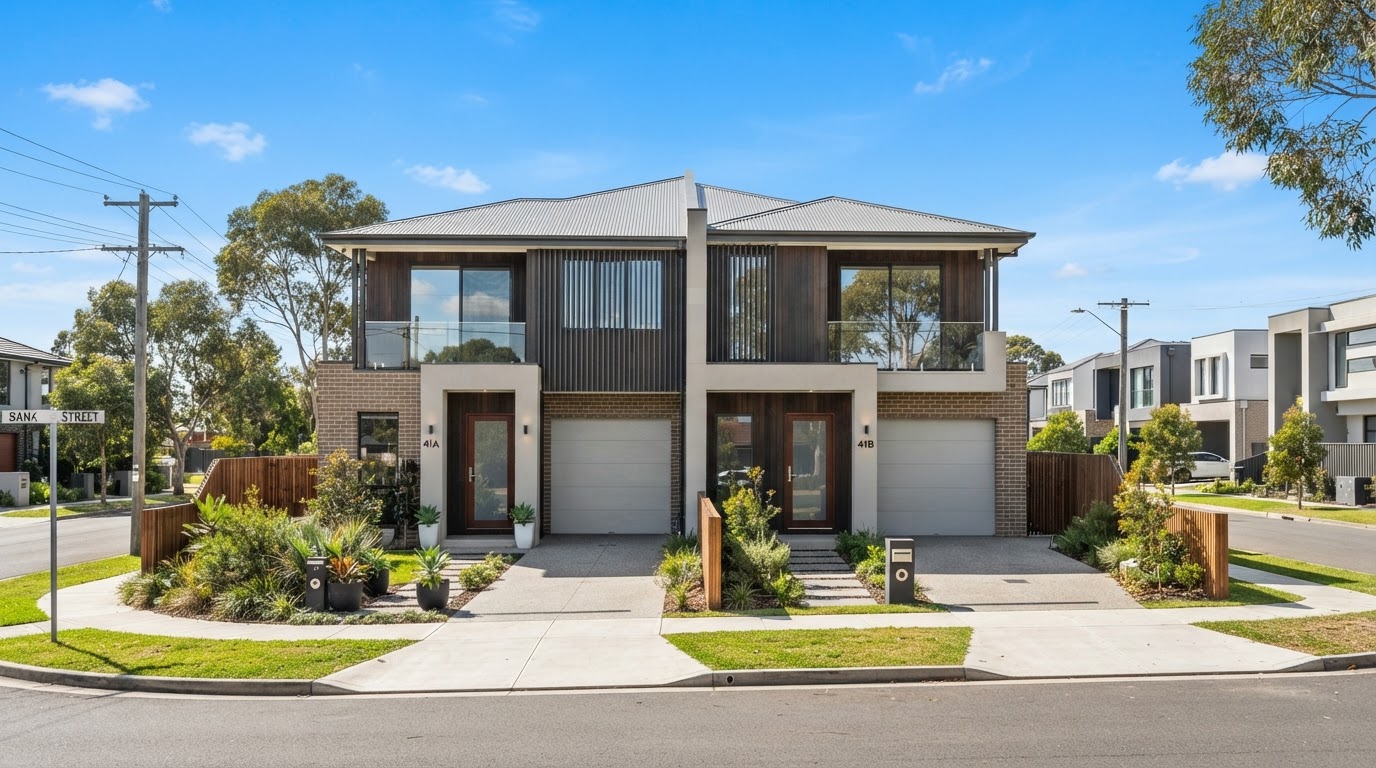
The physical layout of a property is the first thing worth examining, and individual designs can vary significantly even within the same category. A duplex generally consists of two separate dwellings, while a dual-key property generally contains two separate or semi-independent living areas within a single overall property configuration. The specifics, however, depend entirely on the individual development.
- Number of living areas and whether they are fully self-contained
- Separate entrances and the degree of physical independence between dwellings
- Kitchens, bathrooms and living spaces for each tenancy
- Shared walls, common areas and structural connections
- Parking arrangements and private outdoor space
2. Title and Ownership Structure
Understanding exactly what is being purchased is essential. Title arrangements, ownership structure, subdivision potential and planning approvals can all differ between properties. Some duplexes may have separate titles while others may not. Dual-key properties can also have different ownership and title structures depending on the development and the council involved. Arrangements vary, and no single rule applies to every property.
- Whether the dwellings sit on one title or multiple titles
- Strata or community title arrangements where relevant
- Subdivision potential and any planning constraints
- Whether dwellings can legally be dealt with independently
- The role of local council approvals in the ownership structure
3. Privacy and Tenant Experience
Property design can affect how tenants experience the home, but the individual design matters more than the label alone. A duplex does not automatically provide greater privacy than a dual-key property, and vice versa. What matters is how the specific property has been configured.
- Acoustic privacy and the extent of shared walls
- Separate entrances and independent access points
- Parking allocation and private outdoor areas
- Shared facilities or common areas
- The degree of independence between the two tenancies
4. Local Rental Demand
Having two living areas does not automatically mean there will be strong demand for both. Local tenant demographics, household types, employment access, affordability, transport, nearby services and competing rental supply all influence whether a particular configuration suits the local market. Two tenants do not automatically create better returns, and occupancy depends on the individual property and location.
- Local tenant demographics and the types of households seeking rentals
- Employment access and proximity to workplaces
- Affordability for tenants relative to local incomes
- Transport, schools and nearby services
- Competing rental supply of similar configurations
5. Management and Maintenance
Additional living areas may also create additional management considerations. Multiple tenancy arrangements, tenant turnover, repairs, maintenance, utilities, common areas, insurance and property management all form part of the practical picture. Understanding these obligations before purchase helps an investor assess whether the configuration suits their circumstances.
- Multiple tenancy arrangements and coordination between occupants
- Tenant turnover and vacancy management
- Repairs, maintenance and shared structural elements
- Utilities, metering and common area responsibilities
- Insurance and property management requirements
6. Location
Comparing property configurations without considering location gives an incomplete picture. A configuration that works well in one market may not suit another. Local employment, infrastructure, transport, population and household characteristics, housing supply, tenant demand, nearby services, local development and competing properties all form part of the research. For a broader framework, see Barry's guide to Property Investment Locations, or the NSW Property Investment and Queensland Property Investment hubs for state-level considerations.
- Local employment and industry diversity
- Infrastructure including roads, rail, schools and healthcare
- Population and household characteristics
- Housing supply and competing properties
- Tenant demand for the specific configuration
7. Exit, Ownership and Resale Considerations
Before purchasing, it can be useful to understand the questions that may affect a future sale. The future buyer pool, ownership arrangements, property configuration, whether dwellings can legally be dealt with separately, local buyer demand, financing considerations, marketability and any planning or subdivision constraints can all influence how a property is perceived by future buyers. These factors vary between properties and should be investigated individually rather than assumed.
- The likely future buyer pool for the configuration
- Whether dwellings can legally be sold or dealt with separately
- Financing considerations that may affect future buyers
- Marketability and local buyer demand
- Planning or subdivision constraints that may apply
Is Dual Key or Duplex Better?
Neither configuration is universally better. Dual-key and duplex properties have different characteristics, but the label alone does not determine whether an individual property is suitable. Location, ownership structure, tenant demand, design, costs, risks and the buyer's circumstances all require separate investigation. An individual considering a property may need independent financial, legal, taxation and lending advice from appropriately qualified professionals before making a decision.
Read the Detailed Property Guides
This article is intended to add practical depth rather than replace the dedicated guides. For a full explanation of each property type, read the Duplex Property Investment Australia guide and the Dual Key vs Duplex comparison page. These resources explain the concepts in more detail and provide the foundation for the practical comparisons above.
Historical Dual-Key Case Studies
Barry has genuine historical dual-key property case studies, including the Western Australia Dual-Key Investment and the South of Sydney Dual-Key Investment. These are dual-key examples and should not be described as duplex properties. Figures relate to this individual historical case study. Property values and market conditions vary, and past performance is not indicative of future results. Historical figures should not be extrapolated into forecasts, and another property will not necessarily produce similar results.
Barry's Research Approach
Barry's property research does not begin by simply choosing between dual key and duplex. The individual property is considered alongside factors such as location, ownership structure, property design, tenant market, housing supply, infrastructure, risks and the investor's circumstances. Barry explores the importance of looking beyond a property label and examining the underlying property and market fundamentals in The Diamonds of Australian Real Estate, drawing on more than 40 years of property experience. For more on how Barry works with investors, see the Property Investment Services page.
Frequently Asked Questions
Common questions Australian investors ask regarding property investment strategy and market entry.
- The label dual-key or duplex does not determine whether an individual property is suitable.
- Title, ownership and subdivision arrangements vary between properties and should be confirmed individually.
- Privacy and tenant experience depend on the specific design, not the category.
- Two living areas do not automatically guarantee strong demand or higher returns.
- Location, management and resale considerations form part of the research alongside configuration.
- Independent financial, legal, taxation and lending advice may be required before any decision.
- Historical case-study figures relate to individual examples and are not indicative of future results.
Summary & Strategic Outlook
Comparing a dual key vs duplex investment comes down to researching the individual property rather than relying on the label. Configuration, title, privacy, rental demand, management, location and resale considerations all require separate investigation, and neither property type is universally better. Barry Ison's approach is to examine the underlying property and market fundamentals before any decision is made. If you are researching a duplex, dual-key property or another residential property opportunity, Barry can help you better understand the property, its location and the questions worth investigating.

Barry Ison
Property Investment Advisor with over 40 years of hands-on experience guiding Australian investors through property acquisition, growth corridor analysis, negative gearing strategy, and long-term portfolio structuring.
Related Market Insights
What Is Property Investing? An Educational Introduction
A clear educational introduction to what property investing means in Australia — covering how it works, capital growth versus rental income, different property types, location and risk considerations, and why a property label does not determine an investment outcome.
What Is a Dual Key Property? Understanding the Configuration
An educational guide to what a dual key property is in Australia — covering how the configuration works, the single title structure, how it differs from a duplex, potential characteristics, risks to investigate, and why the configuration does not determine investment returns.
What Is a Property Investment Advisor and What Do They Do?
A plain-English explanation of what a property investment advisor does, how property research works, and how the role differs from financial, legal, tax and lending professionals.
Book Your Personal Strategy Session
Speak directly with Barry Ison (40+ years experience) to discuss your financial targets and build a customized property portfolio strategy.
