
Duplex Property: Advantages, Risks and Considerations
"A duplex may provide two separate dwellings within one development, but the word 'duplex' alone does not determine whether an individual property is suitable. Title, subdivision, planning, tenant demand, privacy, management and finance all deserve careful investigation."
Executive Summary & Context
A duplex can offer a different residential configuration from a conventional single dwelling, but the word 'duplex' alone does not determine whether an individual property is suitable. Duplex arrangements can vary in terms of design, ownership, title, subdivision, planning, tenancy, utilities and privacy. Not all duplex properties are the same, not all can be separately sold, not all can be separately titled, rental demand varies, financial outcomes vary, and future performance cannot be guaranteed. This article explores the potential duplex property advantages and disadvantages in a balanced way, so you can better understand the issues worth investigating before any decision is made. For a full explanation of how the property type works, see Barry's dedicated Duplex Property Investment guide.
A Quick Recap: What Is a Duplex?
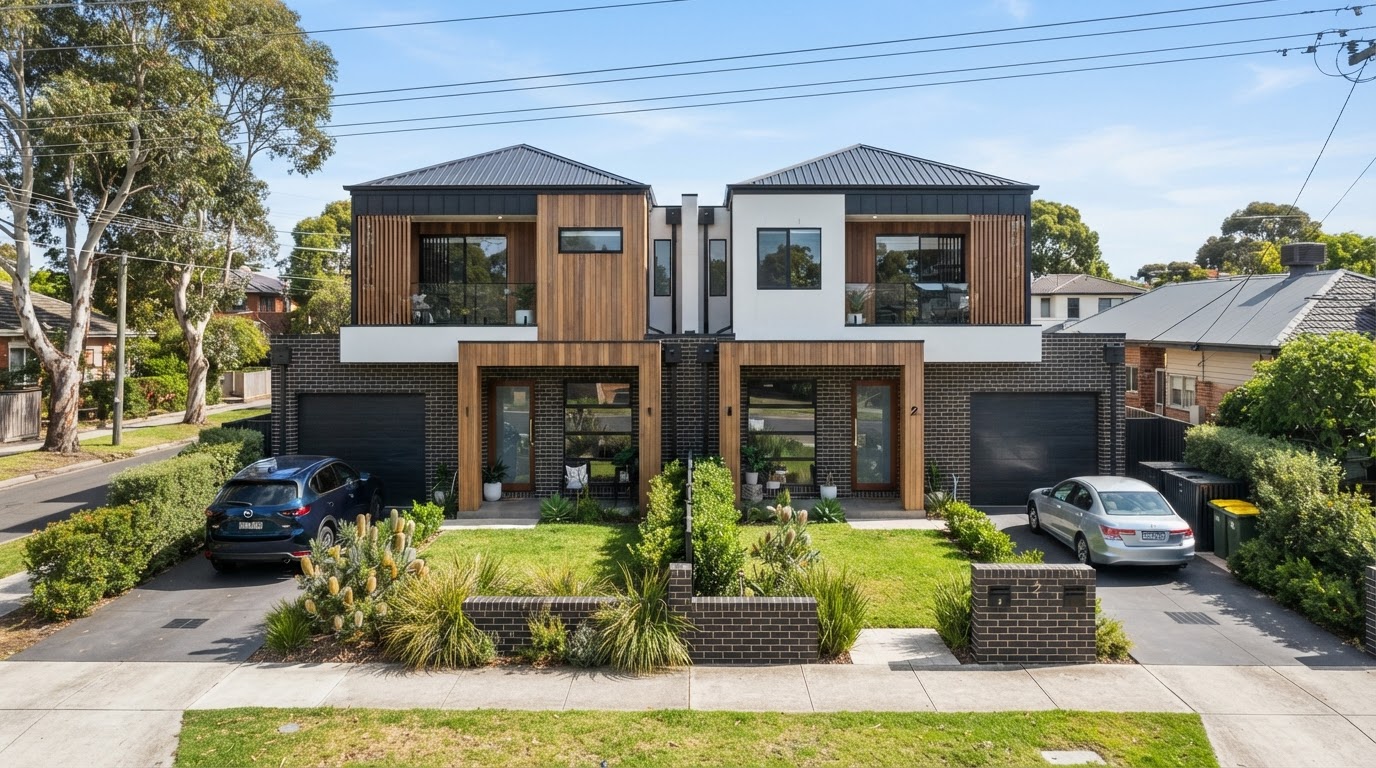
A duplex commonly refers to a residential development containing two dwellings within one overall building or development arrangement. Depending on the property, the dwellings may be side by side, arranged differently on the site, designed with separate entrances, and substantially independent in their living facilities. The exact meaning, planning classification, title structure and ownership arrangements can differ by jurisdiction and individual property, so no universal statements can be made. Readers who want the complete explanation should explore Barry's dedicated Duplex Property Investment guide rather than relying on a short summary here.
Potential Advantage 1: Two Residential Dwellings
A duplex may provide two separate residential dwellings within one overall development. Potential practical implications can include separate households, separate living spaces, potentially separate tenancy arrangements where permitted, and different occupancy possibilities. This should not be described as 'double income', 'guaranteed dual income' or 'two guaranteed rental streams'. Rental outcomes depend on actual tenant demand, occupancy, rents achieved, expenses, property design, location and applicable tenancy arrangements. No rental forecast can be made, and the relevance of this feature depends on the individual property and circumstances.
Potential Advantage 2: Degree of Independence
Many duplex designs provide a high degree of separation between dwellings. This may involve separate entrances, independent kitchens, separate bathrooms, separate living areas, parking, and private outdoor areas depending on the design. However, not every duplex has complete separation. Actual privacy and independence depend on the design, and the specific layout matters more than the label.
Potential Advantage 3: Ownership Flexibility May Exist
Some duplex developments may have ownership or subdivision arrangements that allow dwellings to be dealt with independently. However, this is not universally true. Whether separate ownership or sale is possible may depend on title, subdivision, planning, approvals, local requirements and the individual property. This article does not claim that 'a duplex gives you two properties' or that 'both sides can always be sold separately', and it does not provide legal advice. Appropriate independent legal, planning or conveyancing advice should be obtained where relevant.
Risk 1: Title and Subdivision
The physical appearance of two separate dwellings does not automatically tell someone how the property is legally structured. Questions may include whether there is one title or more than one, whether subdivision has occurred, whether subdivision is permitted, what planning approvals exist, what restrictions apply, and whether either dwelling can be dealt with independently. This article does not provide legal advice, does not assume future subdivision approval, and does not make universal claims about title. Appropriate independent legal, planning or conveyancing advice should be obtained where required.
Risk 2: Local Planning Rules
Duplex development and use may be affected by zoning, council requirements, planning controls, minimum lot requirements, setbacks, access, parking, site characteristics and subdivision rules. These vary between jurisdictions. This article does not provide detailed planning advice and does not state that a duplex can be developed on a particular block unless verified. Local council and state planning information should be checked for the specific property.
Risk 3: Tenant Demand
Having two dwellings does not mean demand automatically exists for both. Someone researching a duplex may investigate local household types, employment, affordability, competing rental supply, dwelling sizes, bedroom configurations, parking, privacy, outdoor areas, and access to transport and services. Property design needs to fit local demand, and a mismatch between configuration and tenant preferences can affect occupancy and rent. For a broader framework on how locations are researched, see Barry's guide to Property Investment Locations.
- Local household types and the kinds of tenants seeking rentals
- Employment access and proximity to workplaces
- Affordability for tenants relative to local incomes
- Competing rental supply of similar configurations
- Bedroom configurations, parking and outdoor space
Risk 4: Privacy and Shared Walls
Practical issues such as acoustic separation, shared walls, driveway arrangements, parking, outdoor space, bins, access and neighbouring tenant interactions can all affect how tenants experience the property. This does not mean every duplex suffers from noise or privacy issues — good or poor design can materially change the experience, and the specific layout matters more than the label.
Risk 5: Property Management
More than one tenancy may create additional management considerations. Possible issues include tenant turnover, repairs, access, communication, common areas, shared facilities, maintenance and utility arrangements. This does not mean duplex property is necessarily harder or more expensive to manage — complexity depends on the individual configuration.
Risk 6: Utilities and Shared Services
Someone may need to understand arrangements for electricity, water, gas where relevant, internet, drainage, driveways and common services. Separate meters should not be assumed, and arrangements vary between properties. This article does not provide legal or utility-billing advice, and the individual property's service arrangements should be confirmed.
Risk 7: Insurance
Insurance needs may depend on title, ownership arrangements, building configuration, occupancy and common areas. This article does not recommend insurance products, estimate premiums, claim duplex insurance is cheaper or more expensive, or provide insurance advice. The individual property and intended use should be confirmed with an appropriately qualified insurer or professional before any decision is made.
Risk 8: Finance and Valuation
Finance treatment can differ based on factors including title, subdivision, property configuration, valuation, location, borrower circumstances and lender policies. This article does not recommend lenders, predict borrowing capacity, predict valuations, provide lending advice, or state that duplex finance is easier or harder universally. Borrowing arrangements should be discussed with an appropriately qualified lending professional.
Construction Considerations
Where the duplex is a new development, construction can introduce additional matters such as site suitability, design, approvals, builder, specifications, construction stages, site costs, variations, completion, defects and subdivision timing where applicable. This article does not provide construction-cost estimates, building advice, engineering advice, or construction timelines as guarantees. Construction and building matters should be discussed with appropriately qualified professionals.
Resale Considerations
Questions someone may investigate include title, the ability or inability to sell dwellings separately, the buyer market, local demand, property configuration, condition and ownership structure. This article does not forecast resale values and does not claim duplexes automatically have better resale, worse resale or higher capital growth.
Location Still Matters
A duplex configuration cannot make up for inadequate understanding of the location. Factors may include employment, infrastructure, housing supply, rental demand, population and household characteristics, transport, services, development pipeline, competing duplex or rental properties, and location-specific risks. For more on how locations are researched, see Barry's guide on What Makes a Location Suitable for Property Investment and the practical guide on How to Research an Australian Suburb for Property Investment. No location is recommended in this article.
Duplex vs Dual Key
Duplex and dual-key are not interchangeable terms. They may differ in overall design, physical separation, title, planning, ownership structure, subdivision and future sale options. Because the website has a dedicated comparison page, this section is kept short. For the full comparison, read Barry's Dual Key vs Duplex guide. Readers interested in the parallel discussion of dual-key property may also find the Dual Key Property: Advantages, Risks and Considerations article useful when comparing the issues associated with the two configurations.
Questions to Investigate Before Considering a Duplex
The following questions are for research only and do not form a numerical investment score or a buy/no-buy decision tool.
- What exactly is the duplex configuration?
- What is the title arrangement?
- Has the property been subdivided?
- Can the dwellings legally be dealt with separately?
- What planning approvals apply?
- Who is likely to rent each dwelling?
- What competing rental properties exist?
- How private are the dwellings?
- How is parking arranged?
- Are utilities separate or shared?
- Are there shared areas?
- What maintenance arrangements apply?
- What insurance considerations exist?
- How might lenders assess the property?
- What risks affect the location?
- What information requires professional verification?
Potential Advantages and Risks at a Glance
The table below summarises some of the potential advantages and issues to investigate. It is educational only and does not represent an investment score, a winner or a recommendation. Potential advantages are not guaranteed, and every factor depends on the individual property.
Is Duplex Property a Good Investment?
Duplex describes a property configuration, not an investment outcome. Whether an individual property warrants further consideration depends on factors such as its location, title, planning arrangements, property design, tenant demand, housing supply, costs, risks and the buyer's circumstances. Being a duplex alone does not guarantee rental income, capital growth, lower risk, better returns or future subdivision. This article does not recommend the property type, and no universal yes or no answer can be given.
Barry Ison's Approach
Barry does not assess a property simply because it carries the label 'duplex'. With more than 40 years of Australian property-industry experience, his research may consider individual property characteristics, location, tenant demand, housing supply, title, planning, property configuration, employment, infrastructure, surrounding development and potential risks. Barry does not predict capital growth, guarantee rental income, guarantee subdivision, find guaranteed high-yield duplexes or recommend duplex property universally. He discusses the importance of understanding both the property type and the underlying location fundamentals in The Diamonds of Australian Real Estate, drawing on more than 40 years of property experience. For more on how Barry works with investors, see the Property Investment Services page.
Frequently Asked Questions
Common questions Australian investors ask regarding property investment strategy and market entry.
- Duplex describes a property configuration, not a guaranteed investment outcome.
- Potential advantages such as two dwellings or ownership flexibility are not guaranteed.
- Title, subdivision and planning arrangements vary between properties and must be confirmed individually.
- Tenant demand may not match the design — the local tenant market needs to be researched.
- Privacy, management, utilities, insurance and finance can all differ between properties.
- Location should be researched alongside configuration, not separately from it.
- Being a duplex alone does not guarantee rental income, capital growth or future subdivision.
Summary & Strategic Outlook
Understanding the potential duplex property advantages and disadvantages helps frame the questions worth investigating, but the label alone does not determine whether an individual property is suitable. Configuration, title, subdivision, planning, privacy, tenant demand, management, utilities, insurance, finance, resale and location all require separate investigation. Barry Ison's approach is to examine the underlying property and market fundamentals before any decision is made. For a broader explanation of how duplex property works, explore Barry's dedicated Duplex Property Investment guide.

Barry Ison
Property Investment Advisor with over 40 years of hands-on experience guiding Australian investors through property acquisition, growth corridor analysis, negative gearing strategy, and long-term portfolio structuring.
Related Market Insights
What Is Property Investing? An Educational Introduction
A clear educational introduction to what property investing means in Australia — covering how it works, capital growth versus rental income, different property types, location and risk considerations, and why a property label does not determine an investment outcome.
What Is a Dual Key Property? Understanding the Configuration
An educational guide to what a dual key property is in Australia — covering how the configuration works, the single title structure, how it differs from a duplex, potential characteristics, risks to investigate, and why the configuration does not determine investment returns.
7 Things to Compare Before Choosing Between Dual-Key and Duplex Property
A practical comparison of the seven factors worth researching when comparing dual-key and duplex investment property in Australia — configuration, title, privacy, demand, management, location and resale.
Book Your Personal Strategy Session
Speak directly with Barry Ison (40+ years experience) to discuss your financial targets and build a customized property portfolio strategy.
