
What Is a Growth Corridor in Property?
"A growth corridor generally describes an area where population, housing, infrastructure or employment is expanding or planned to expand. The term does not mean property values within that area are guaranteed to increase."
Executive Summary & Context
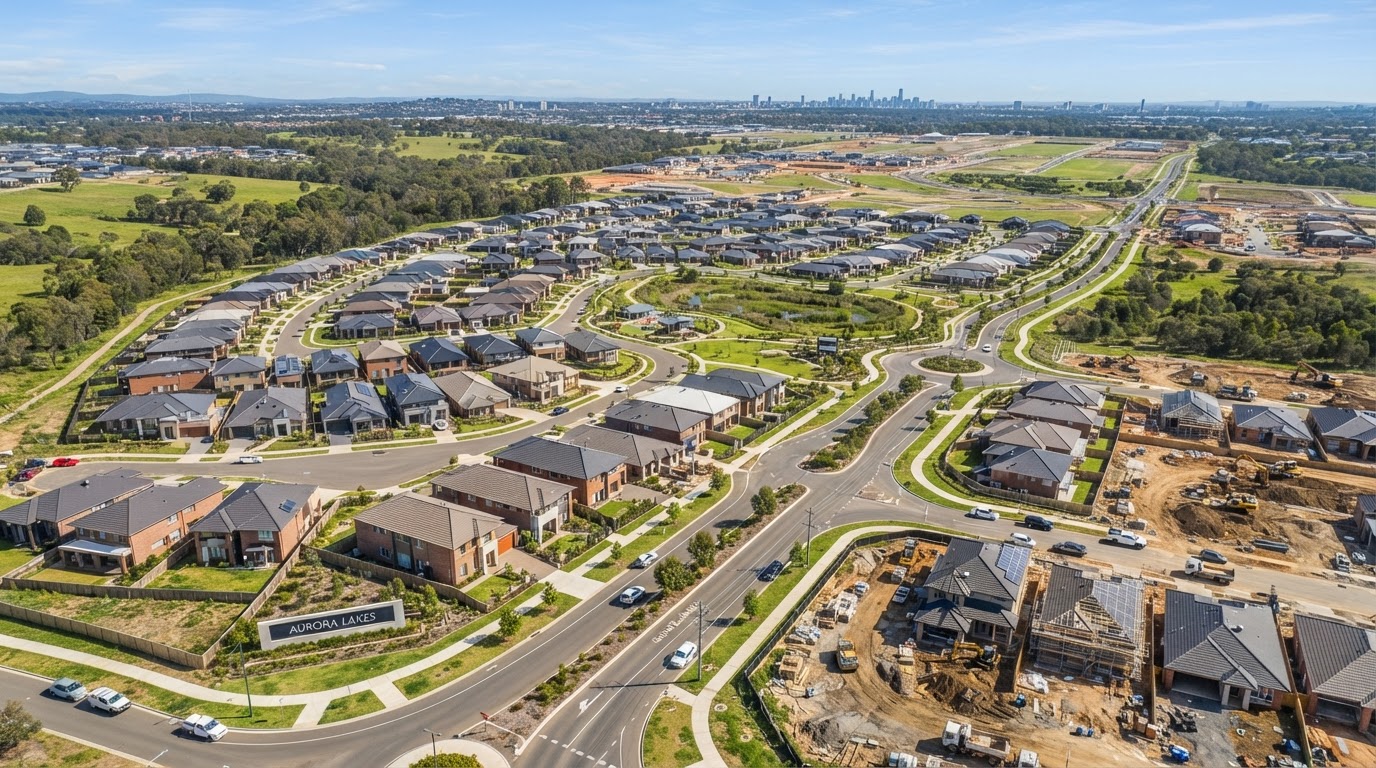
In property, a growth corridor generally describes a broader area where population, housing, infrastructure, employment or services are expanding or planned to expand. However, the term does not mean property values within that area are guaranteed to increase. The phrase can be used in different ways — sometimes as an official planning designation, sometimes as a more informal description used by developers, media or property businesses. Different areas within the same corridor can have different fundamentals, and individual properties still need to be assessed separately. This article explains what a growth corridor is in property and what someone should understand when they encounter the term. For a broader look at how Australian property locations can be researched, explore Barry's Property Investment Locations guide.
What Does 'Growth Corridor' Actually Mean?
A growth corridor may involve development occurring along or around transport routes, new residential areas, expanding metropolitan edges, employment centres, infrastructure projects or regional development areas. A corridor can cover numerous suburbs, estates, towns and employment areas at once. The term is used to describe a geographic area experiencing or planned for substantial change — not to define a guaranteed investment outcome. It is important not to define a growth corridor exclusively in terms of property-price appreciation. The 'growth' in the name can refer to population, housing, infrastructure or economic activity, none of which automatically translates into rising property values for every property within the area.
- Development along transport routes or expanding metropolitan edges
- New residential areas, employment centres and infrastructure projects
- A corridor can span multiple suburbs, estates and towns
- 'Growth' refers to population, housing or infrastructure — not guaranteed price growth
Is 'Growth Corridor' an Official Term?
The answer depends on the context. Some corridors are formally identified in government planning strategies, connected to planning frameworks, or described in infrastructure and land-use documents. In other cases, 'growth corridor' is a descriptive or marketing term used by property businesses, developers, media or commentators. A useful question to ask is: who is calling this area a growth corridor? An official planning designation, an industry description, a developer marketing statement and a media description can carry very different levels of authority. This article does not suggest that informal use of the term is misleading by definition, only that readers should understand which meaning applies before treating the label as evidence of future property performance.
- Some corridors are formally identified in government planning strategies
- Others are informal descriptions used by developers, media or property businesses
- Ask who is using the term and on what basis
- An official planning designation carries different authority to a marketing label
Population and Housing
Population and housing development often feature in discussions about growth corridors. Someone researching a corridor may consider household formation, migration, residential development, new estates, land releases and housing demand. Population growth alone, however, does not guarantee property-price growth, rental growth or investment success. A growing population can be accompanied by substantial new housing supply, changing employment conditions or shifting affordability, all of which can influence how an individual property is positioned. Population is one factor to understand, not a standalone signal to rely on.
- Household formation, migration and residential development
- New estates, land releases and housing demand
- Population growth alone does not guarantee property-price growth
- Population must be considered alongside supply, employment and affordability
Housing Supply Matters Too
An expanding area may also involve significant new housing construction. Someone researching a growth corridor may investigate land releases, new estates, apartment projects, house-and-land development and competing rental properties. More people moving into an area may increase housing demand, but substantial new housing supply can also change market conditions for individual properties. The balance between added demand and added supply is a factor to investigate rather than a simple rule to follow. This article does not forecast the outcome of that balance, because conditions vary between corridors, suburbs and individual properties.
- Land releases, new estates and apartment projects
- House-and-land development and competing rental properties
- Added demand and added supply can both influence market conditions
- The balance between supply and demand varies by location
Employment and Economic Activity
Employment may form part of corridor research. Someone investigating a growth corridor may consider employment centres, access to jobs, industry diversity, commuting patterns, new commercial areas and dependence on individual industries. Employment provides useful context because people generally need reasons to live in or near an area, and access to work is a significant part of that picture. However, employment growth does not guarantee property growth, and heavy dependence on a single industry can create additional risk if that industry contracts. Employment is a factor to research, not a forecast to make.
- Employment centres and access to jobs
- Industry diversity and commuting patterns
- New commercial areas and dependence on individual industries
- Employment provides context but does not guarantee property growth
Infrastructure and Transport
Infrastructure can influence accessibility, commuting, services and the connections between residential and employment areas. Potential examples include roads, rail, public transport, hospitals, schools and community services. It is critical to verify whether projects are proposed, announced, planned, approved, funded, under construction or completed. Proposed infrastructure should not be treated as confirmed, and announced projects do not always proceed exactly as first described. Infrastructure alone does not automatically increase property values. Readers should verify project status using official sources such as state governments, local councils, transport agencies and infrastructure authorities rather than relying on marketing material.
- Roads, rail, public transport, hospitals and schools
- Verify whether projects are proposed, funded, under construction or completed
- Proposed infrastructure should not be treated as confirmed
- Infrastructure alone does not automatically increase property values
Services and Amenities
Growing residential areas may require access to schools, healthcare, shopping, recreation, transport and community facilities. Services can affect how practical an area is for different households — a location popular with families may have different service priorities to one popular with young professionals. It is worth avoiding simplistic rules such as 'more amenities always equal better investment performance.' The relevance of services depends on the target tenant or buyer market and the individual property. Services are part of the research picture, not a formula for predicting outcomes.
- Schools, healthcare, shopping, recreation and community facilities
- Service priorities differ between household types
- More amenities do not automatically equal better investment performance
- Relevance depends on the target tenant or buyer market
Rental Demand
Someone investigating a growth corridor may examine likely tenant groups, employment accessibility, competing rentals, housing types, affordability, services and transport. Rental demand can differ significantly by property configuration, household size, location, price and accessibility. This article does not predict rents, guarantee occupancy, forecast rental growth, quote unverified yields or claim that growth corridors automatically provide strong rental demand. Rental conditions can change over time, and the existence of a corridor label does not determine whether a particular property will be tenanted.
- Likely tenant groups and employment accessibility
- Competing rentals, housing types and affordability
- Rental demand differs by configuration, location and price
- A corridor label does not guarantee occupancy or rental growth
Does Buying in a Growth Corridor Guarantee Capital Growth?
No. A corridor can contain many different suburbs, streets, developments, property types, price points, levels of supply and risks. Property values can rise, fall or remain relatively unchanged. The existence of infrastructure, population growth, development or employment within a corridor does not guarantee an individual property's future performance. The words 'growth corridor' must never be treated as meaning 'property prices are guaranteed to grow.' The term describes an area experiencing change, not a prediction of investment outcomes. Past performance is not indicative of future results.
- A corridor contains many different suburbs, property types and price points
- Property values can rise, fall or remain relatively unchanged
- Infrastructure and population growth do not guarantee individual property performance
- 'Growth corridor' does not mean 'guaranteed property-price growth'
Not Every Property Within a Corridor Is the Same
Two properties within the same broader corridor may differ in exact location, property type, land, configuration, title, price, surrounding supply, tenant market, access to services and risks. A growth-corridor label describes an area. It does not assess the individual property. Even within a corridor that is experiencing genuine population and infrastructure change, individual properties can have different tenant appeal, different risks and different long-term characteristics. Location research at the corridor level is one layer; the individual property is another. Both layers deserve separate investigation before any decision is made.
- Properties in the same corridor can differ in type, land, title and price
- Surrounding supply, tenant market and risks can vary street by street
- A corridor label describes an area, not the individual property
- Both corridor-level and property-level research are required
Questions to Ask When a Property Is Marketed as Being in a Growth Corridor
When a property is promoted as being located in a growth corridor, a practical research approach is to ask questions that go beyond the label itself. The following questions are educational and are not a buy or no-buy decision tool. They are designed to help someone investigate the underlying characteristics of the area and the individual property rather than rely on a marketing phrase.
- Who has defined the area as a growth corridor?
- Is there an official planning document supporting the description?
- What infrastructure is actually confirmed, and what is merely proposed?
- What employment exists nearby, and is it diversified?
- Who is moving into the area, and what are their housing needs?
- How much new housing is planned or under construction?
- What property types are being built, and what competing rental supply exists?
- Who may rent this particular type of property?
- What services are available, and what location-specific risks exist?
- What characteristics does the individual property have?
Growth Corridor vs Property Hotspot
These phrases should not automatically be treated as synonyms. 'Growth corridor' may describe planning, development and demographic change across an area. 'Property hotspot' is often used more loosely to suggest potential future property performance. Because future performance cannot be guaranteed, relying on 'hotspot' labels is generally less useful than researching underlying fundamentals. This article does not nominate any hotspots, and it does not treat the two terms as interchangeable. The more useful approach is to examine the actual characteristics of an area and property rather than relying on either label.
- 'Growth corridor' describes planning, development and demographic change
- 'Property hotspot' is often used to suggest future performance
- Future performance cannot be guaranteed, so hotspot labels are limited
- Research underlying fundamentals rather than relying on either label
How Growth Corridors Fit Into Broader Location Research
Identifying a corridor is only one layer of location research. Other factors include employment, housing supply, rental demand, demographics, infrastructure, property type, affordability, local risks and individual property fundamentals. A corridor label may provide a reason for further research, but it does not replace that research. For a broader explanation of how Barry approaches Australian property-location research, explore the Property Investment Locations guide. The related articles on what makes a location suitable for property investment and how to research an Australian suburb for property investment explain the broader characteristics of a property location and the practical process of investigating a suburb respectively. Together, these resources show that a growth corridor is a starting point, not a conclusion.
Barry Ison's Approach
Barry does not treat the words 'growth corridor' as sufficient evidence that a property is suitable. Barry has more than 40 years of Australian property-industry experience, and his research considers location fundamentals, population, employment, infrastructure, housing demand, rental demand, housing supply, property type, individual property characteristics and risks. He does not claim to predict growth corridors, know which corridor will boom next, guarantee capital growth or guarantee property outcomes. His focus is on examining the individual property and the fundamentals surrounding its location rather than relying on a single label. To understand how Barry's own research process works, explore his Property Investment Services page.
Historical Location Research Examples
Barry's website contains genuine historical case studies that illustrate how several location factors can be considered together. The Denman NSW case study involved consideration of factors including affordability, employment, infrastructure, rental demand, regional fundamentals and housing supply. The Cessnock NSW case study involved consideration of population, rental demand, infrastructure and regional fundamentals. These are not presented here as 'growth corridor case studies' — they are historical examples of location research. They are not current recommendations to invest in those locations today, and neither is claimed to be a current growth corridor. Where historical figures are referenced, they relate to this individual historical case study. Property values and market conditions vary, and past performance is not indicative of future results.
Going Deeper: The Diamonds of Australian Real Estate
Barry explores why one headline or one statistic is rarely enough to assess a local property market in The Diamonds of Australian Real Estate, drawing on more than 40 years of property experience. The book discusses Australia's different property markets, property-market drivers, location research, looking beyond headlines and the questions investors can investigate before buying. It is an educational resource, not a promise of investment returns, and reading or buying it will not improve investment performance on its own. The book does not identify guaranteed growth corridors.
Frequently Asked Questions
Common questions Australian investors ask regarding property investment strategy and market entry.
- A growth corridor describes an area experiencing or planned for population, housing, infrastructure or employment change — not guaranteed property-price growth.
- The term can be an official planning designation or an informal marketing description; ask who is using it and on what basis.
- Population growth alone does not guarantee property-price growth, especially when housing supply is also increasing.
- Infrastructure status must be verified — proposed is not the same as funded, under construction or completed.
- Two properties within the same corridor can differ significantly in type, supply, tenant market and risk.
- A growth-corridor label is a starting point for research, not a prediction of investment performance.
- Growth corridors and property hotspots are not synonyms; both labels are less useful than underlying fundamentals.
- Historical case-study figures relate to individual examples and are not indicative of future results.
Summary & Strategic Outlook
A growth corridor is a description of an area experiencing or planned for change — not a guarantee that property values within that area will increase. The term can be an official planning designation or an informal label, and it should prompt further research rather than replace it. Population, housing supply, employment, infrastructure, services, rental demand and individual property characteristics all need to be investigated separately, and two properties within the same corridor can perform very differently. Barry Ison's approach is to examine the individual property and the fundamentals surrounding its location rather than relying on a single label. For a broader look at how Barry approaches Australian property-location research, explore the Property Investment Locations guide.

Barry Ison
Property Investment Advisor with over 40 years of hands-on experience guiding Australian investors through property acquisition, growth corridor analysis, negative gearing strategy, and long-term portfolio structuring.
Related Market Insights
What Is Property Investing? An Educational Introduction
A clear educational introduction to what property investing means in Australia — covering how it works, capital growth versus rental income, different property types, location and risk considerations, and why a property label does not determine an investment outcome.
What Is a Dual Key Property? Understanding the Configuration
An educational guide to what a dual key property is in Australia — covering how the configuration works, the single title structure, how it differs from a duplex, potential characteristics, risks to investigate, and why the configuration does not determine investment returns.
7 Things to Compare Before Choosing Between Dual-Key and Duplex Property
A practical comparison of the seven factors worth researching when comparing dual-key and duplex investment property in Australia — configuration, title, privacy, demand, management, location and resale.
Book Your Personal Strategy Session
Speak directly with Barry Ison (40+ years experience) to discuss your financial targets and build a customized property portfolio strategy.
