
Dual Key Property: Advantages, Risks and Considerations
"Dual-key property may offer flexible occupancy and more than one rental area, but the configuration also introduces practical issues around title, planning, privacy, management and finance that deserve careful investigation."
Executive Summary & Context
A dual-key property generally contains two separate living areas within one overall property configuration. That may create flexibility in how the property is occupied or rented, but the term 'dual key' alone does not tell you whether an individual property is suitable. Designs vary, title arrangements vary, planning approvals vary, tenant demand varies, and financial outcomes vary. Future property performance cannot be guaranteed. This article explores the potential dual key property advantages and disadvantages in a balanced way, so you can better understand the issues worth investigating before any decision is made. For a full explanation of how the property type works, see Barry's dedicated Dual-Key Property Investment guide.
A Quick Recap: What Is a Dual-Key Property?
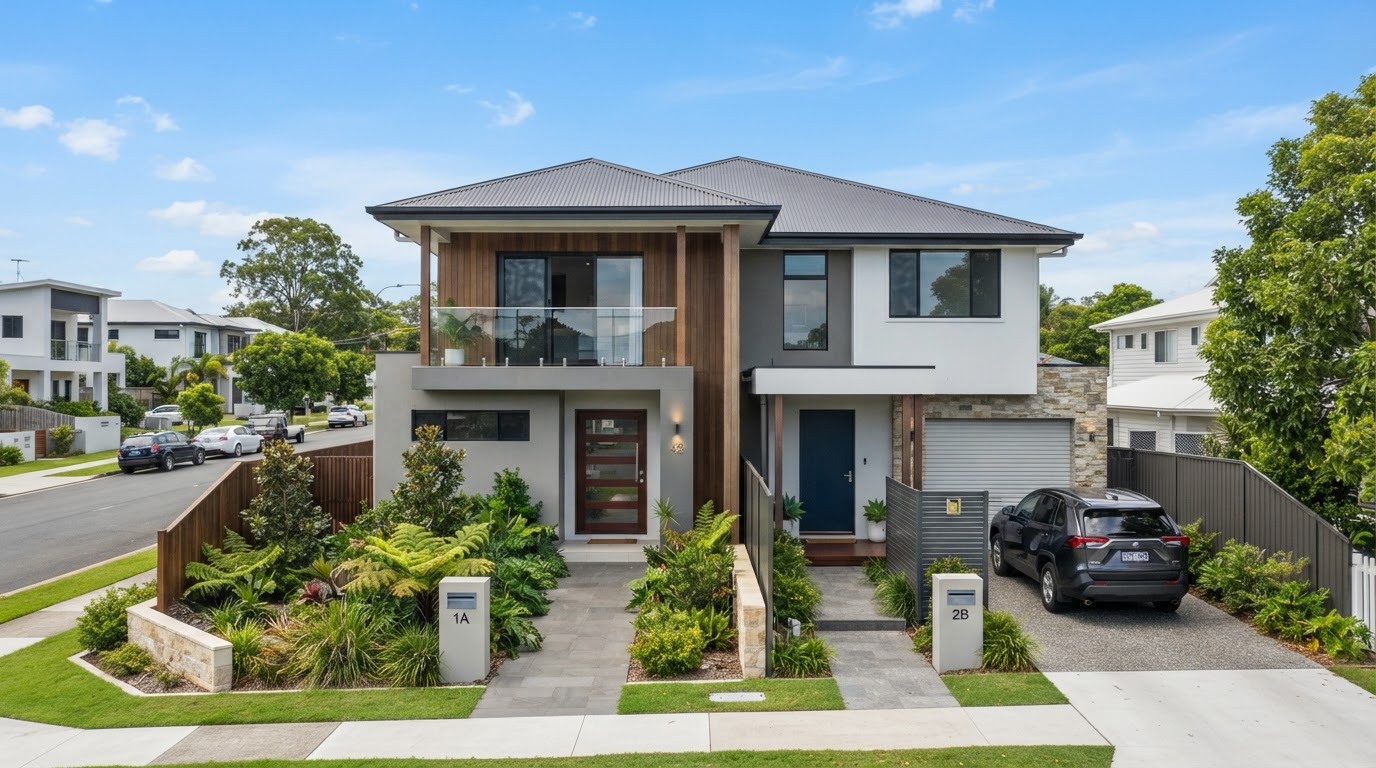
A dual-key property commonly contains two living areas designed to provide a degree of independence within an overall property. Depending on the development, possible features may include separate entrances, separate living areas, bedrooms, bathrooms, kitchen or kitchenette facilities, and shared or separate outdoor areas. Not all dual-key properties are identical, and no universal claims can be made about titles, kitchens, utility meters, tenancy arrangements or planning approvals. Readers who want the complete explanation should explore Barry's dedicated Dual-Key Property Investment guide rather than relying on a short summary here.
Potential Advantage 1: Flexible Occupancy
Dual-key designs may provide flexibility in how different living areas are used. Depending on the property, possible arrangements could involve separate households, extended family, different tenant arrangements where legally permitted, or owner occupation of one area while another area is occupied in different circumstances. Not every arrangement is legally permitted, however. Planning, tenancy, insurance, title and local regulations must all be understood for the individual property before any occupancy assumption is made.
Potential Advantage 2: More Than One Rental Area
Some dual-key properties may be designed so that separate living areas can potentially be rented separately, where legally and practically appropriate. This should not be described as guaranteed dual income, guaranteed cash flow, guaranteed rental return or passive income. Two living areas do not automatically mean two reliable income streams. Actual rental outcomes depend on factors such as tenant demand, vacancy, the rent achieved, expenses, property configuration, location and tenancy arrangements. No rental forecast can be made, and the relevance of this feature depends on the individual property and circumstances.
Potential Advantage 3: Different Household Needs
Some dual-key designs may appeal to different household arrangements, including couples, singles, smaller households and extended families. This does not mean demand exists without local evidence. The local tenant market needs to be researched for the specific property type and location, because a configuration that suits one area may not suit another.
Risk 1: Tenant Demand May Not Match the Design
A property having two living areas does not automatically mean local tenants want that configuration. Someone researching a dual-key property may investigate local household types, employment, affordability, competing rentals, property sizes, privacy expectations, parking, outdoor space and local services. Property design needs to fit local demand, and a mismatch between configuration and tenant preferences can affect occupancy and rent. For a broader framework on how locations are researched, see Barry's guide to Property Investment Locations.
- Local household types and the kinds of tenants seeking rentals
- Employment access and proximity to workplaces
- Affordability for tenants relative to local incomes
- Competing rental supply of similar configurations
- Privacy expectations, parking and outdoor space
Risk 2: Privacy and Acoustics
Practical considerations such as shared walls, noise transfer, entrances, parking, outdoor areas, bins, access and shared spaces can all affect how tenants experience the property. The term 'dual key' does not indicate the quality of the design, and potential tenants may experience very different levels of privacy depending on the individual property. This does not mean all dual-key properties have privacy problems — it means the specific layout matters more than the label.
Risk 3: Title, Planning and Approvals
Title and planning arrangements need careful investigation. Questions may include what the title structure is, what the approved use is, whether both living areas are approved as designed, what planning conditions apply, and whether the areas can legally be occupied or rented in the intended way. This article does not provide legal advice, and no universal statements can be made such as 'all dual-key properties are on one title' or 'both areas can always be rented independently'. Appropriate independent legal and property advice should be obtained where required.
Risk 4: Property Management Can Be More Complex
More than one tenancy arrangement, tenant turnover, maintenance, common areas, communications, access, utilities and property management can all form part of the practical picture. This does not mean management is necessarily difficult — complexity depends on the individual configuration. Understanding these obligations before purchase helps an investor assess whether the configuration suits their circumstances.
Risk 5: Utilities and Metering
Buyers should understand how services are arranged, including electricity, water, gas where relevant, internet, shared services and metering. Not every dual-key property has separately metered utilities, and arrangements vary between properties. This article does not provide legal or utility billing advice, and the individual property's service arrangements should be confirmed.
Risk 6: Insurance
Property configuration and occupancy can affect insurance considerations. This article does not recommend an insurance product, estimate premiums, claim dual-key insurance is cheaper or more expensive, or provide insurance advice. The individual property and intended use should be disclosed accurately to an appropriate insurer or professional before any decision is made.
Risk 7: Finance Can Vary
At a high level, lenders may assess properties differently depending on title, property configuration, valuation, location, borrower circumstances and lending policy. This article does not recommend lenders, provide borrowing advice, predict valuation outcomes or tell readers how much they can borrow. Borrowing arrangements should be discussed with an appropriately qualified lending professional.
Resale and Future Buyer Considerations
Property configuration can influence the future buyer pool. Issues someone may investigate include title structure, property design, local demand, market familiarity with the configuration, flexibility of use, and the ability or inability to deal with living areas separately. This article does not forecast resale prices and does not state that dual-key properties have better or worse resale performance universally.
Location Still Matters
Dual-key property should not be assessed solely on configuration. Location factors may include employment, infrastructure, tenant demographics, housing supply, transport, services, affordability, competing rental properties and surrounding development. For more on how locations are researched, see Barry's guide on What Makes a Location Suitable for Property Investment and the practical guide on How to Research an Australian Suburb for Property Investment. No location is recommended in this article.
Dual Key vs Duplex
Dual-key and duplex are not automatically interchangeable terms. They may differ in design, title, planning, degree of separation, subdivision, ownership arrangements and resale options. Because the website has a dedicated comparison page, this section is kept short. For the full comparison, read Barry's Dual Key vs Duplex guide and the Duplex Property Investment Australia page.
Questions to Investigate Before Considering a Dual-Key Property
The following questions are for research only and do not form a numerical investment score or a buy/no-buy decision tool.
- What exactly is the property configuration?
- What is the title structure?
- What planning approvals apply?
- Can each area legally be occupied as intended?
- Who is likely to rent each area?
- What competing rental properties exist?
- How private are the two living areas?
- How are utilities arranged?
- How is parking configured?
- What maintenance responsibilities exist?
- What insurance considerations apply?
- How might lenders view the property?
- What risks affect the location?
- What information requires independent professional verification?
Potential Advantages and Risks at a Glance
The table below summarises some of the potential advantages and issues to investigate. It is educational only and does not represent an investment score, a winner or a recommendation. Potential advantages are not guaranteed, and every factor depends on the individual property.
Is Dual-Key Property a Good Investment?
Dual-key describes a property configuration, not an investment outcome. Whether an individual property warrants further consideration depends on the property itself, the location, tenant demand, ownership and planning arrangements, costs, risks and the buyer's circumstances. This article does not recommend the property type, and no universal yes or no answer can be given.
Historical Dual-Key Case Studies
Barry has genuine historical dual-key case studies, including the Western Australia Dual-Key Investment and the South of Sydney Dual-Key Investment. These are dual-key examples and should not be described as duplex properties. They can demonstrate how individual property research, location research, dual-key configuration and different factors were considered. Figures relate to this individual historical case study. Property values and market conditions vary, and past performance is not indicative of future results. Historical figures should not be extrapolated into forecasts, and another property will not necessarily produce similar results.
Barry Ison's Approach
Barry does not assess a property simply because it carries the label 'dual key'. With more than 40 years of Australian property-industry experience, his research may consider individual property characteristics, location, tenant demand, housing supply, configuration, employment, infrastructure, title and planning issues, management considerations and potential risks. Barry does not guarantee rental income, predict capital growth, find guaranteed high-yield properties or recommend dual-key universally. He discusses the importance of understanding the property type, location and underlying fundamentals in The Diamonds of Australian Real Estate, drawing on more than 40 years of property experience. For more on how Barry works with investors, see the Property Investment Services page.
Frequently Asked Questions
Common questions Australian investors ask regarding property investment strategy and market entry.
- Dual-key describes a property configuration, not a guaranteed investment outcome.
- Potential advantages such as flexible occupancy or more than one rental area are not guaranteed.
- Title, planning and approvals vary between properties and must be confirmed individually.
- Tenant demand may not match the design — the local tenant market needs to be researched.
- Privacy, management, utilities, insurance and finance can all differ between properties.
- Location should be researched alongside configuration, not separately from it.
- Historical case-study figures relate to individual examples and are not indicative of future results.
Summary & Strategic Outlook
Understanding the potential dual key property advantages and disadvantages helps frame the questions worth investigating, but the label alone does not determine whether an individual property is suitable. Configuration, title, planning, privacy, tenant demand, management, utilities, insurance, finance, resale and location all require separate investigation. Barry Ison's approach is to examine the underlying property and market fundamentals before any decision is made. For a broader explanation of how dual-key property works, explore Barry's dedicated Dual-Key Property Investment guide.

Barry Ison
Property Investment Advisor with over 40 years of hands-on experience guiding Australian investors through property acquisition, growth corridor analysis, negative gearing strategy, and long-term portfolio structuring.
Related Market Insights
What Is Property Investing? An Educational Introduction
A clear educational introduction to what property investing means in Australia — covering how it works, capital growth versus rental income, different property types, location and risk considerations, and why a property label does not determine an investment outcome.
What Is a Dual Key Property? Understanding the Configuration
An educational guide to what a dual key property is in Australia — covering how the configuration works, the single title structure, how it differs from a duplex, potential characteristics, risks to investigate, and why the configuration does not determine investment returns.
7 Things to Compare Before Choosing Between Dual-Key and Duplex Property
A practical comparison of the seven factors worth researching when comparing dual-key and duplex investment property in Australia — configuration, title, privacy, demand, management, location and resale.
Book Your Personal Strategy Session
Speak directly with Barry Ison (40+ years experience) to discuss your financial targets and build a customized property portfolio strategy.
