
New Residential Property Investment Australia
New residential property can include newly completed homes, townhouses, apartments and house-and-land developments. The fact that a property is new does not determine its investment suitability — the individual property, location, supply, demand, price and risks still need to be understood.
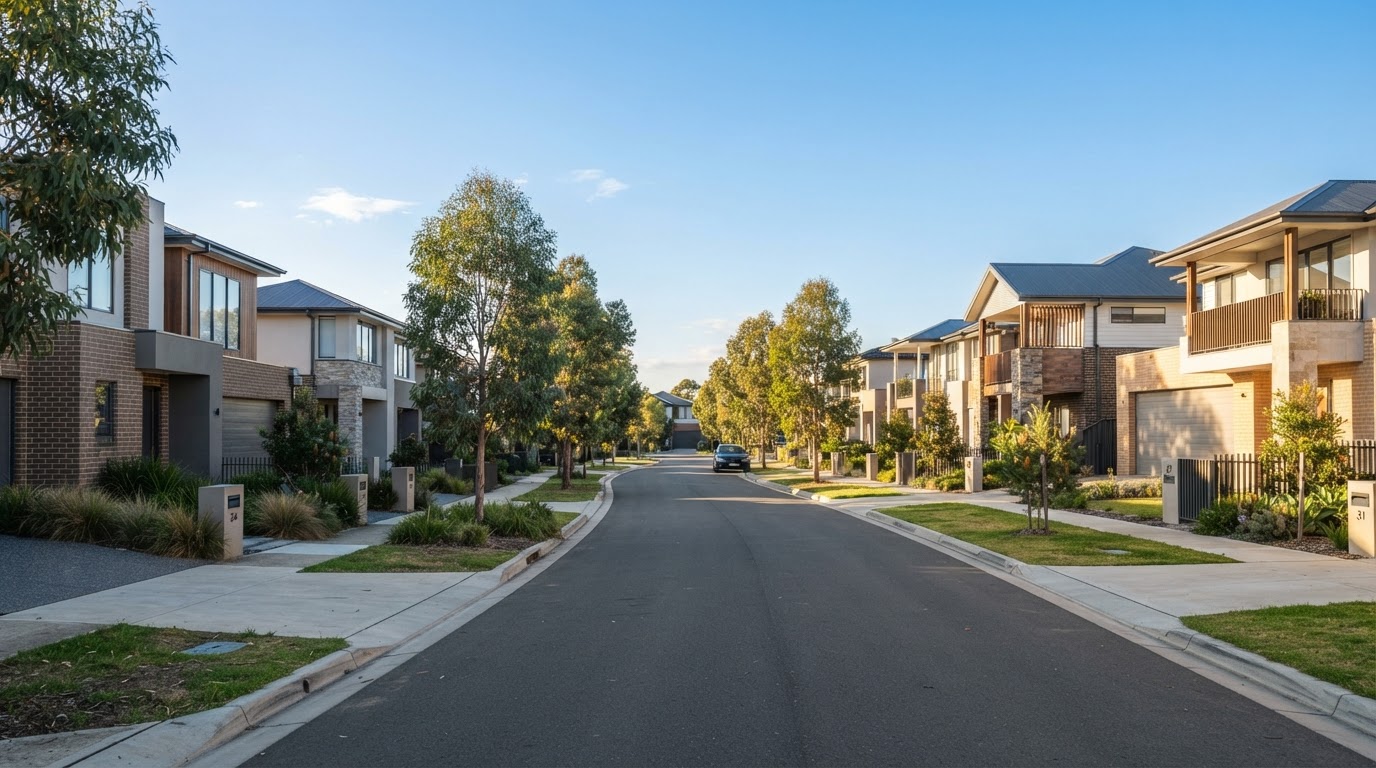
What Is New Residential Property?
"New residential property" generally refers to a recently constructed or newly completed dwelling. Depending on the individual property, this may include newly constructed houses, new townhouses, new apartments, house-and-land property, or newly completed residential developments.
"New" describes the property's age and construction status. It does not automatically describe quality, investment suitability, value, rental performance or future growth. A newly built property may still require the same careful investigation as any other property.
Newness is a characteristic. It is not an investment outcome.
Different Types of New Property
New residential property is not one uniform category. The types below can have different ownership arrangements, tenant markets, land components, planning considerations, management requirements, costs and risks. They should not be described as interchangeable.
New detached homes
Newly completed free-standing houses, where research may focus on land component, construction quality, location fundamentals and comparable sales.
House & land
A new-build arrangement combining land purchase and construction. One form of new residential property, not synonymous with all new property.
New townhouses
Newly constructed attached dwellings, where research may consider strata or community title arrangements, shared walls and local tenant demand.
New apartments / units
A different segment of new residential property, where matters may include strata, body corporate, common facilities, apartment supply and ongoing costs.
Dual-key configurations
Two living areas within a single building on one title. 'Dual key' describes the configuration — it may be newly constructed, but is a distinct concept from 'new property'.
Duplex configurations
Dual-occupancy buildings. 'Duplex' describes a different property configuration — it may be newly constructed, but is not synonymous with all new property.
House & Land
House-and-land is one category of new residential property, combining the purchase of land with a construction contract. It is not explained in full here, because the arrangement has its own characteristics worth understanding separately.
For more detail on that specific structure, see House and Land Packages Explained for Property Investors.
New Apartments and Units
New apartments and units form a different segment of new residential property. Matters that may be relevant include the building, the location, apartment supply, strata or body corporate arrangements, common facilities, property configuration, the local tenant market, building quality and ongoing costs.
New Property Does Not Automatically Mean Better Property
Newness is a characteristic of a property. It is not an investment outcome. A newly built property may still require investigation of price, construction quality, defects, location, housing supply, tenant demand, local development, resale characteristics, management and ongoing costs.
This page does not claim that new property is better, safer, offers better returns, or is the smarter choice. The relevance of these characteristics depends on the individual property, location and investor.
Construction Quality
A new building should not automatically be assumed to be defect-free. Areas that may require appropriate investigation include workmanship, materials, specifications, inclusions, defects, completion and documentation.
This page does not provide building-inspection advice. Where construction quality is a consideration, appropriately qualified professionals should be engaged to assess the specific property.
Builder and Developer Research
Where a builder or developer is involved, someone may investigate information such as project history, completed developments, construction quality, relevant licences or registrations where applicable, contractual documentation, project delivery history and reputation supported by reliable evidence.
This page does not endorse or attack specific builders and does not invent builder information. A property opportunity may come to Barry's attention through long-standing industry relationships, but that does not imply a property is recommended simply because a builder or developer supplies it.
Completed New Property vs Property Still Under Construction
A completed new property may be physically inspected before purchase. Property still under construction may involve reliance on contracts, plans, specifications, schedules, documentation, renders and display material rather than the finished building itself.
Not all new property is purchased off-the-plan. "Off-the-plan" describes a purchase arrangement and should not automatically be treated as synonymous with all new property. For a detailed comparison of the two arrangements and the information each may provide, see Off-the-Plan vs Completed New Property.
Marketing Material vs the Actual Property
Marketing material should not replace due diligence. Potential materials include renders, brochures, display homes, projected views, indicative floorplans, rental appraisals and promotional descriptions.
A reader should understand what is confirmed, what is indicative, and what is marketing. Each carries a different weight and should be understood in context.
Inclusions and Specifications
Someone researching new property may need to understand what is actually included. Possible items include flooring, landscaping, fencing, appliances, window coverings, lighting, air-conditioning, driveways and external works.
This page does not provide contractual advice and does not assume that "turnkey" has one universal definition. The specific contract and inclusions should be reviewed with an appropriately qualified professional.
Construction and Completion Risks
Depending on the property, potential considerations may include delays, variations, site issues, builder circumstances, approvals, completion, defects and differences between expectations and the finished product.
These are presented as matters that may require investigation, not as problems that will occur.
Maintenance
A new property may initially have less age-related wear than an older property. However, new does not mean maintenance-free. Maintenance can still depend on construction quality, fixtures, landscaping, appliances, common property, tenant use and individual circumstances.
This page does not claim that new properties always cost less to maintain.
Tax and Depreciation
The age and construction of a property may affect the taxation treatment of certain property-related items. However, this page does not calculate depreciation, tax deductions, tax refunds or tax savings, and does not claim that new property provides better tax benefits.
Tax outcomes depend on the individual property, expenditure, ownership, tax rules and the taxpayer's circumstances. Readers should consult an appropriately qualified tax professional.
Rental Demand
A new property does not automatically create tenant demand. Research may include household demographics, employment, transport, local rental supply, affordability, competing properties, property configuration and local services.
For a broader view of how locations are researched, see Property Investment Locations Australia.
Rental Appraisals Are Not Guarantees
A rental appraisal or estimated rent is not guaranteed rent. It may change, depends on market conditions, and should be understood in context. This page does not publish an estimated rental return unless it comes from verified Barry-supplied historical material or a reliable, identifiable source.
To understand how rental figures relate to property value, see How Rental Yield Is Calculated on an Investment Property.
Housing Supply
New property is often created where additional residential supply is being developed. Research may include current housing supply, future land releases, the apartment pipeline, competing new homes, nearby development and rental supply.
A growing area can experience both more demand and more supply. Both matter. This page does not assume one automatically dominates the other, and does not forecast the effect of supply on property values.
Location Still Matters
A new dwelling does not automatically compensate for weak location fundamentals. Location research may include employment, infrastructure, population and demographics, housing supply, rental demand, transport, services, accessibility, development and local risks.
See Property Investment Locations Australia, What Makes a Location Suitable for Property Investment? and How to Research an Australian Suburb for Property Investment.
Infrastructure and New Developments
New developments are sometimes marketed around proposed transport, schools, hospitals, retail, employment precincts, roads and other infrastructure. The status of each project matters.
This page never implies infrastructure is guaranteed unless verified. For more, see How Infrastructure and Employment Can Affect Property Markets.
Buying in a New Estate
Potential matters may include housing supply, future stages, land releases, services, transport, employment access, local amenities, construction activity, the tenant market and surrounding development.
This page does not say new estates are good or bad investments. Each estate and each property within it should be researched on its own fundamentals.
New Property vs Established Property
New and established property have different characteristics and research considerations. Neither is universally better. The full comparison is covered separately and is not duplicated here.
Price and Value Are Not the Same Thing
A contract price does not automatically prove market value. Potential research may consider comparable sales, individual property characteristics, location, property type, supply and valuation.
This page does not claim that new property always has a developer premium, and does not claim that new property is overpriced. It remains neutral.
Incentives
Some new-property marketing may include upgrades, rebates, inclusions or promotional offers where relevant and lawful. An incentive should be understood separately from the underlying property.
This page does not imply that an incentive makes a property a better investment.
Finance and Valuation
Lending and valuation may depend on property type, purchase arrangement, property valuation, location, borrower circumstances and lender policy.
This page does not provide lending advice, does not recommend lenders, and does not predict valuations.
Resale Considerations
Today's new property eventually becomes an established property. Therefore future resale may be affected by location, condition, property type, buyer demand, housing supply, title, design and market conditions.
This page does not forecast resale value.
Questions to Investigate Before Considering New Property
The following questions are for research only and do not form a numerical score or a buy/no-buy decision tool.
Property
- What exactly is being purchased?
- Is it completed?
- What is included?
- What specifications apply?
- What condition or defects have been identified?
Builder / Development
- Who is responsible for construction?
- What verified information exists about the builder or developer?
- What stages remain?
- What surrounding construction is planned?
Location
- Who lives or rents here?
- What employment exists?
- What infrastructure is confirmed?
- What housing supply exists?
- What competing properties exist?
Financial / Professional
- Is rental information actual or estimated?
- What ongoing costs may apply?
- What valuation evidence exists?
- Which legal, building, tax or lending questions require qualified professional advice?
Is New Property a Good Investment?
New property describes the age and construction status of a dwelling, not an investment outcome. Whether an individual property warrants further investigation depends on the investor, property, price, location, supply, demand, quality and risks. For the counterpart perspective on existing dwellings, see the Established Property Investment Australia page.
This page does not answer universally yes, and does not say "yes, if…". It remains genuinely neutral.
Barry Ison's Approach to New Property
Barry does not begin with "we have a new property available." He begins with understanding the investor — their circumstances, objectives and existing position. Then relevant property and location research may follow.
Barry has more than 40 years of Australian property-industry experience. His research may consider investor circumstances, the individual property, location, housing supply, tenant demand, property type, price, employment, infrastructure and risks.
Barry does not always recommend new property, does not prefer new property universally, does not guarantee returns, does not guarantee rent, and does not predict capital growth. For more on how Barry works with investors, see the Property Investment Services page.
Case Studies
Genuine case studies are used only where a property's status as new residential property is verified. The Cessnock NSW example involved a dual-key house-and-land package and is labelled as historical. It is shown for its research context — not to imply a result occurred simply because the property was new, and not to forecast future results.
Cessnock NSW — Dual-Key House & Land
A first-time investor acquired a dual-key house and land package in Cessnock in 2021. Factors including population, rental demand, infrastructure and regional fundamentals were considered. A historical example shown for educational purposes.
Cessnock NSW Case StudyPast performance is not indicative of future results. Property values and market conditions vary.
A Deeper Educational Resource
Barry explores new vs established property, different property types, location research, Australian property markets and the questions worth asking in The Diamonds of Australian Real Estate, drawing on more than 40 years of property experience.
The book is broader education. It is not positioned as recommending new property.
Research New Property in Context
Newness is only one characteristic of a property. Barry's approach considers the investor, individual property and location before drawing conclusions.
Frequently Asked Questions
Common questions Australians search about new residential property investment.
General Information Disclaimer: This information is provided for general educational and informational purposes only. It does not take into account your personal objectives, financial position or needs and does not constitute financial, investment, taxation, legal, lending, building or property advice. New residential properties can vary significantly in construction, contracts, costs, taxation treatment, housing supply, rental demand and risks. Property investment involves risk and market conditions can change. Consider obtaining independent advice from appropriately qualified professionals before making financial, legal, taxation, lending, building or property decisions. Historical examples and past performance are not indicative of future results.
