
Off-the-Plan vs Completed New Property: What's the Difference?
"Both off-the-plan and completed new property can involve new residential property, but the information available at the time of purchase can differ significantly. Neither option is automatically better."
Executive Summary & Context
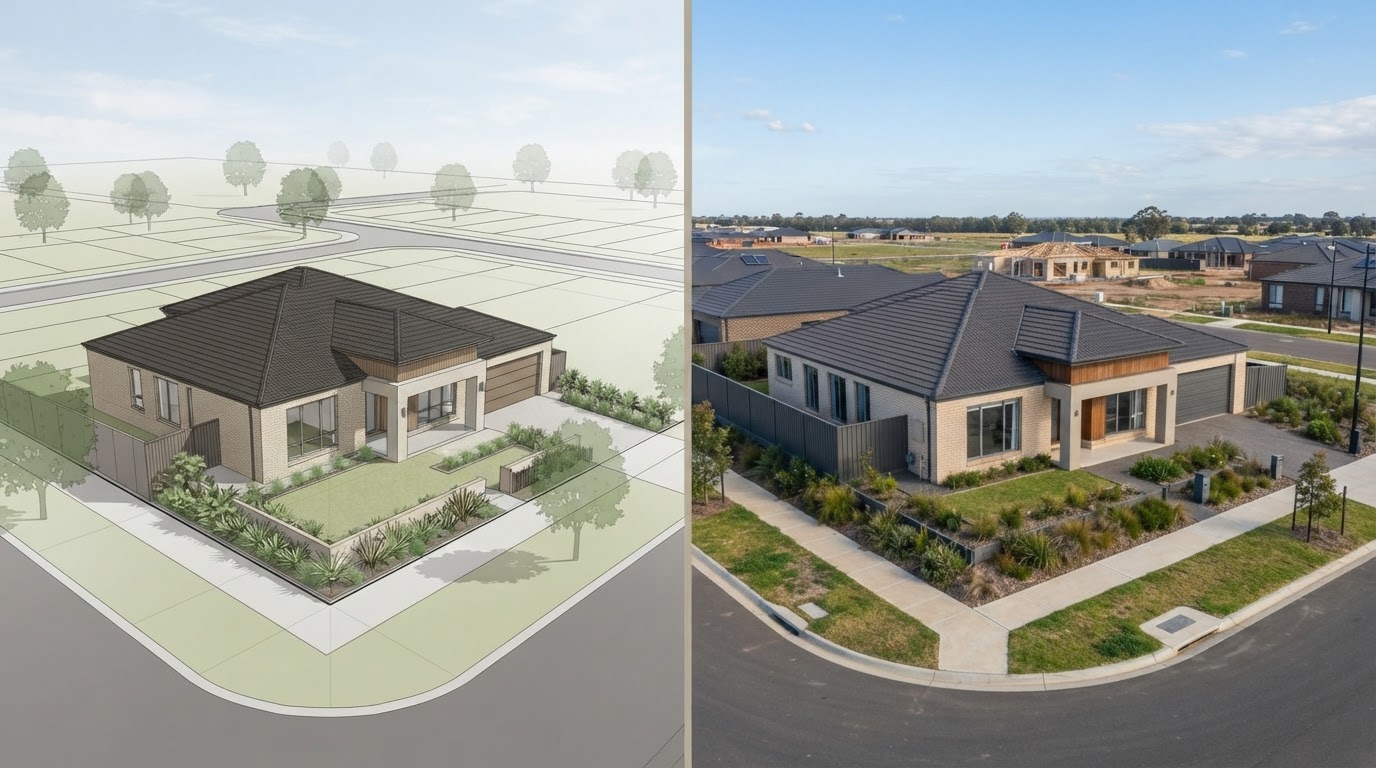
Both off-the-plan and completed new property can involve new residential property, but the information available at the time of purchase can differ significantly. Buying before completion may mean relying more heavily on plans, specifications, renders and contracts, while buying a completed new property may allow physical inspection of the actual dwelling. Neither option is automatically better, and neither determines investment suitability on its own. This article compares off-the-plan and completed new property in a balanced way so you can better understand the questions worth investigating. It does not duplicate the comparison of new versus established property, which is covered separately. For a broader look at newly constructed dwellings as a property type, see Barry's New Residential Property Investment Australia page.
What Does Off-the-Plan Mean?
Off-the-plan generally describes a purchase arrangement where a buyer contracts to purchase property before construction is complete. Depending on the arrangement, this may involve a property that is yet to be built, partially constructed, or nearing completion. The term describes a purchase timing and contract arrangement rather than a single universal property type. This article does not create a universal legal definition, and the specific contract and construction stage should be understood for each purchase. Off-the-plan should not be treated as synonymous with all new property — a completed new property is also new, but is not purchased off-the-plan.
What Is a Completed New Property?
A completed new property is a newly constructed dwelling that has been finished and may be physically inspected before purchase. It may be a newly built house, townhouse, apartment or other residential dwelling that has reached practical completion. A completed new property is still 'new' in terms of construction status, but the buyer may have the opportunity to inspect the actual finished product rather than relying solely on plans and renders. The distinction between off-the-plan and completed is about the information available at the time of purchase, not about which is a better investment.
Comparison at a Glance
The table below summarises some of the general differences between off-the-plan and completed new property. It is educational only and does not represent an investment score, a winner or a recommendation. Every factor depends on the individual property, and neither option is automatically better.
Physical Inspection
A completed new property may generally be physically inspected before purchase, allowing a buyer to observe the actual dwelling, layout, finishes and surrounding property. Before-completion purchases may rely more on plans, specifications, renders, contracts and display material. This does not mean off-the-plan purchases are inferior — it means the type of information available differs, and a buyer should understand what can and cannot be directly verified before committing. Where a property cannot be fully inspected, the contractual documentation becomes more important.
- Completed property may allow inspection of the actual dwelling
- Before-completion purchases may rely on plans and display material
- The type of information available differs between the two
- Contractual documentation matters more where inspection is limited
Plans, Renders and Marketing Material
A render is not a completed property. Marketing material such as renders, brochures, display homes, projected views and indicative floorplans can be useful, but it should be understood as indicative rather than confirmed. The reader should distinguish what is confirmed in the contract from what is merely marketing. Display homes, in particular, may include upgrades or finishes that are not included in the standard purchase. This article does not provide contractual advice, and the specific inclusions should be confirmed in writing for the individual property.
- Renders and brochures are indicative, not the finished product
- Display homes may include non-standard upgrades
- Confirmed inclusions should be verified in the contract
- Marketing material should not replace due diligence
Specifications and Inclusions
Understanding what is actually included matters for both arrangements, but it can be especially important where the property is not yet complete. Potential items may include finishes, appliances, flooring, landscaping, fixtures and variations. The term 'turnkey' should not be assumed to have one universal definition — what is included can differ between builders and contracts. This article does not provide contractual advice, and the specific specifications and inclusions should be confirmed in the contract documentation for the individual property.
- Finishes, appliances, flooring and fixtures
- Landscaping and external works
- Variations and what is excluded
- 'Turnkey' does not have one universal definition
Construction and Completion
Where property is still being constructed, possible considerations may include delays, variations, site issues, builder circumstances, approvals, completion and differences between expectations and the finished product. This article does not state that these problems will occur, nor does it predict timeframes. They are presented as matters that may require investigation. A completed new property has already passed through the construction phase, but it may still have defects or completion issues that warrant inspection. Neither arrangement is free of construction-related considerations.
- Delays and variations where construction is ongoing
- Site issues and builder circumstances
- Completion and defects at handover
- Differences between expectations and finished product
Builder and Developer Research
Where a builder or developer is involved, someone may investigate information such as project history, completed developments, construction quality, relevant licences or registrations where applicable, contractual documentation, project delivery history and reputation supported by reliable evidence. This article does not endorse or attack specific builders and does not invent builder information. Evidence-based research is preferable to assumption, regardless of whether the property is off-the-plan or completed.
- Project history and completed developments
- Construction quality and relevant licences where applicable
- Contractual documentation and delivery history
- Reputation supported by reliable evidence
Valuation Considerations
The contract price and a property's valuation are not automatically the same thing. For off-the-plan purchases, a valuation at settlement may differ from the contract price depending on market conditions, property characteristics and lender policy. For completed property, current comparable evidence may be more readily available, but valuation still depends on the individual property. This article does not provide valuation advice and does not predict whether a valuation will be higher or lower than the contract price.
- Contract price does not automatically equal valuation
- Valuations at settlement may differ for off-the-plan purchases
- Completed property may have more current comparable evidence
- This article does not predict valuations
Rental Appraisals
An estimated rent is not guaranteed rent. A rental appraisal or projected rent may change, depends on market conditions, and should be understood in context. For property purchased before completion, rental figures may be estimates or appraisals rather than evidence of actual rent achieved. For a completed property, there may be more scope to test rental figures against the current market. This article does not publish estimated rental returns and does not forecast rent. To understand how rental figures relate to property value, see Barry's guide on how rental yield is calculated.
- Estimated rent is not guaranteed rent
- Appraisals may change with market conditions
- Before-completion figures may be estimates rather than actuals
- Rental figures should be understood in context
Location and Future Supply
Both arrangements should be researched within their location. For property in a developing area, surrounding stages, land releases, apartment pipelines and the broader development pipeline may affect the characteristics of the location over time. A growing area can experience both more demand and more supply, and this article does not assume one automatically dominates the other. For the broader framework Barry uses when researching locations, see the Property Investment Locations guide.
- Surrounding stages and future land releases
- Apartment pipeline and competing new homes
- Development pipeline in the broader area
- Both demand and supply can grow simultaneously
Infrastructure Claims
New developments are sometimes marketed around proposed transport, schools, hospitals, retail, employment precincts, roads and other infrastructure. It is important to distinguish infrastructure that is proposed, announced, planned, approved, funded, under construction or completed. A project that has been discussed publicly is not the same as one that is funded and underway, and proposed infrastructure should not be treated as guaranteed. For a deeper explanation of how infrastructure and employment can affect property markets, see Barry's supporting article on the topic.
- Proposed is not the same as funded or under construction
- Verify the status of each project using official sources
- Marketing claims should not replace verified status
- Infrastructure alone does not guarantee growth
What to Research Before Either Purchase
The following questions apply to both off-the-plan and completed new property. They are for research only and do not form a numerical investment score or a buy/no-buy decision tool.
- What exactly am I purchasing, and is it completed?
- What is included in the contract, and what is merely marketing?
- What specifications and inclusions apply?
- What verified information exists about the builder or developer?
- What construction stage applies, and what risks remain?
- What valuation evidence exists?
- Is the rental information actual or estimated?
- What housing supply and competing properties exist locally?
- What is the verified status of any infrastructure claims?
- Which legal, building, tax or lending questions require qualified advice?
Which Is Better?
There is no universal answer. Off-the-plan and completed new property describe different purchase arrangements and different information environments, not investment outcomes. Whether an individual property warrants further investigation depends on the property itself, its price, location, supply, demand, condition, construction stage, risks and the buyer's circumstances. This article does not choose one option over the other and does not claim that either is generally better. For the broader comparison of new versus established property, see the companion article on new property vs established property.
Barry Ison's Approach
Barry does not begin by deciding that off-the-plan is better or that completed property is better. With more than 40 years of Australian property-industry experience, his approach begins with the investor and then investigates the individual property and location. Relevant factors may include investor circumstances, property type, construction stage, location, rental demand, housing supply, employment, infrastructure, price and property characteristics, and potential risks. Barry does not universally prefer either arrangement, does not guarantee returns, does not predict capital growth and does not guarantee rental income. For more on how Barry works with investors, see the Property Investment Services page.
Frequently Asked Questions
Common questions Australian investors ask regarding property investment strategy and market entry.
- Off-the-plan and completed new property both involve new residential property, but the information available at purchase differs.
- A render is not a completed property, and marketing material should be distinguished from confirmed contract inclusions.
- Contract price and valuation are not automatically the same, and valuations at settlement may differ.
- Estimated rent is not guaranteed rent, regardless of the purchase arrangement.
- Infrastructure claims should be verified — proposed is not the same as funded or under construction.
- Neither option is automatically better; suitability depends on the individual property and circumstances.
Summary & Strategic Outlook
Understanding the difference between off-the-plan and completed new property helps frame the questions worth investigating, but the purchase arrangement alone does not determine whether an individual property is suitable. Inspection, plans and renders, specifications, construction, builder research, valuation, rental evidence, housing supply, infrastructure and location all require separate investigation. Neither option guarantees capital growth, rental income or investment outcomes. Barry Ison's approach is to look beyond the purchase arrangement and consider the individual property, location, demand, supply, risks and the investor's circumstances. To understand how Barry researches individual properties, explore his Property Investment Services. General Information Disclaimer: This article is provided for general educational and informational purposes only. It does not take into account your personal objectives, financial position or needs and does not constitute financial, investment, taxation, legal, lending, building or property advice. New residential properties can vary significantly in construction, contracts, costs, taxation treatment, housing supply, rental demand and risks. Property investment involves risk and market conditions can change. Consider obtaining independent advice from appropriately qualified professionals before making financial, legal, taxation, lending, building or property decisions. Historical examples and past performance are not indicative of future results.

Barry Ison
Property Investment Advisor with over 40 years of hands-on experience guiding Australian investors through property acquisition, growth corridor analysis, negative gearing strategy, and long-term portfolio structuring.
Related Market Insights
What Is Property Investing? An Educational Introduction
A clear educational introduction to what property investing means in Australia — covering how it works, capital growth versus rental income, different property types, location and risk considerations, and why a property label does not determine an investment outcome.
What Is a Dual Key Property? Understanding the Configuration
An educational guide to what a dual key property is in Australia — covering how the configuration works, the single title structure, how it differs from a duplex, potential characteristics, risks to investigate, and why the configuration does not determine investment returns.
7 Things to Compare Before Choosing Between Dual-Key and Duplex Property
A practical comparison of the seven factors worth researching when comparing dual-key and duplex investment property in Australia — configuration, title, privacy, demand, management, location and resale.
Book Your Personal Strategy Session
Speak directly with Barry Ison (40+ years experience) to discuss your financial targets and build a customized property portfolio strategy.
