
New Property vs Established Property: Key Differences
"The main difference between a new property and an established property is the property's construction and occupation history. Neither characteristic, by itself, determines whether a property is suitable."
Executive Summary & Context
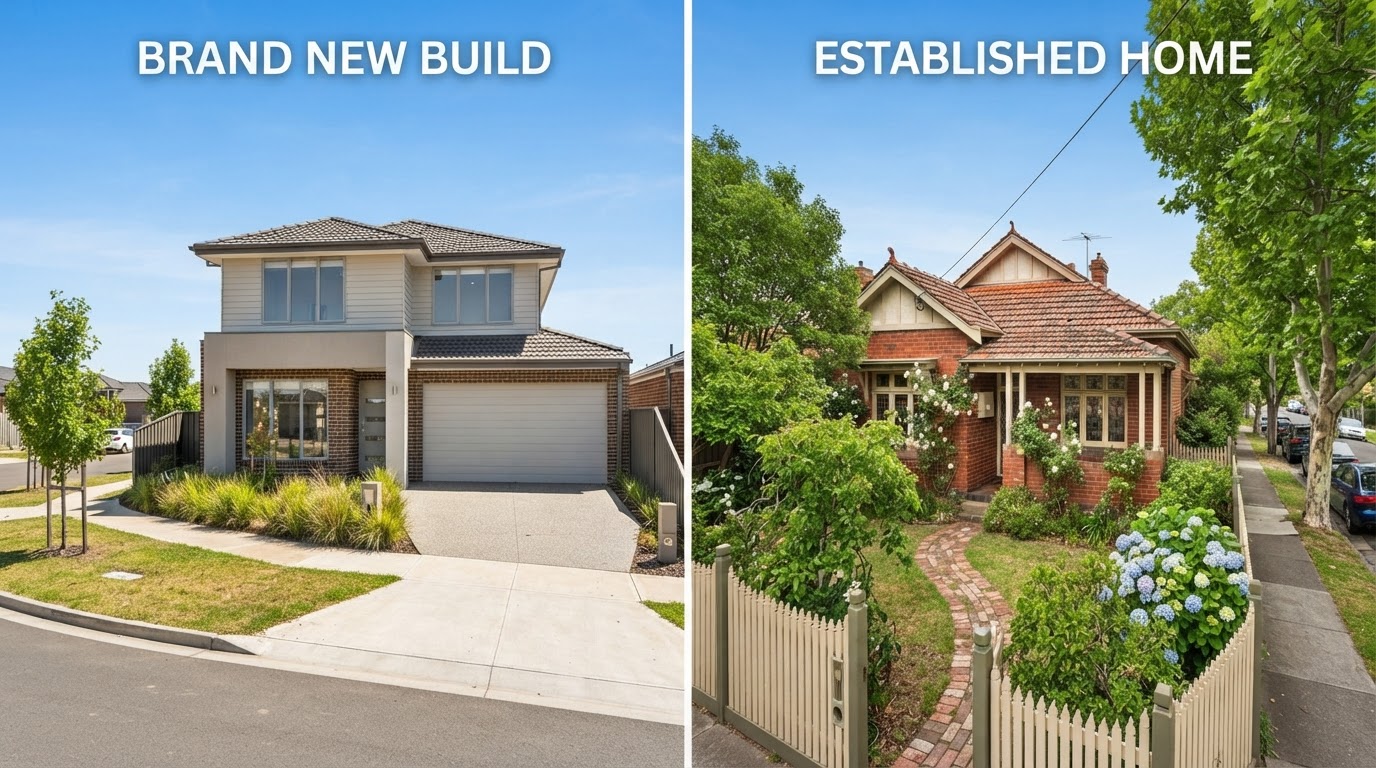
The main difference between a new property and an established property is the property's construction and occupation history. A new property may offer recently built design, fixtures and construction, while an established property provides an existing building and a longer property history. Neither characteristic, by itself, determines whether a property is suitable. Both categories can contain strong or weak individual properties, different locations, different levels of supply, different tenant markets and different risks. This article compares new property vs established property in a balanced way so you can better understand the questions worth investigating. For a broader look at how Barry researches individual properties, see his Property Investment Services.
What Is Considered a New Property?
A new property may generally refer to a newly constructed or recently completed residential property that has not had a long history of occupation. Depending on context, this may include a newly built detached house, a newly completed apartment, a new townhouse, a house-and-land construction, or other recently constructed residential property. 'New property' should not automatically be treated as synonymous with off-the-plan, house and land, apartments, or investment property. These are separate concepts that can overlap, and the specific arrangement should be understood for each purchase. For a broader look at newly constructed dwellings as a property type, see Barry's New Residential Property Investment Australia page.
What Is an Established Property?
An established property generally refers to an existing property that has previously been occupied or has an existing history as residential property. An established property may have previous occupants, an existing physical condition, previous sales history, existing surrounding development, maintenance history where available, and previous rental evidence where available. This does not imply that established properties always have complete records — the information available for any individual property should be investigated. For a broader look at existing dwellings as a property type, see Barry's Established Property Investment Australia page.
New vs Established Property at a Glance
The table below summarises some of the general differences between new and established property. It is educational only and does not represent an investment score, a winner or a recommendation. Every factor depends on the individual property, and neither category is automatically better.
1. Property Condition
A new property may have new fixtures, recently completed materials and limited wear. An established property may have visible wear, older components, previous repairs and a maintenance history. However, a new property is not automatically defect-free, and an established property is not automatically in poor condition. The individual property needs to be assessed on its own merits rather than by category alone.
2. Ability to Inspect the Property
With a completed established property, someone may generally be able to inspect the actual dwelling before purchase. With some new property, the completed property may already exist, but where property is still under construction, plans, specifications, display homes and renders may form part of the information available before completion. This does not apply to every new purchase. It is important to understand exactly what is being purchased and how much of the finished property can be directly inspected before committing.
3. Construction and Completion Risk
Purchasing property that is still being constructed can introduce considerations such as construction delays, builder issues, variations, site conditions, approvals, completion, defects, and differences between marketing material and contractual inclusions. This does not imply that every new property is purchased before completion, nor that established property has no construction-related risks. The specific contract and construction stage should be understood for each purchase.
4. Maintenance and Repairs
A newer property may have fewer age-related maintenance issues initially, depending on construction quality and the individual property. An established property may have existing components requiring maintenance, repair or replacement. However, new property should not be described as maintenance-free, and established property does not necessarily have high maintenance costs. Potential problems depend on the individual building and its condition.
5. Building Defects
Defects can occur in both new and established buildings. For new property, issues may become apparent during construction, at completion or after occupation. For established property, previous issues may sometimes be visible or documented. This article does not provide building-inspection advice. Appropriate independent building or inspection professionals should be engaged where relevant to assess the specific property.
6. Warranties and Builder Responsibilities
Recently constructed property may be subject to certain builder, statutory or contractual obligations depending on jurisdiction, construction, contract and timing. This article does not state universal warranty periods, does not provide legal advice, and does not imply that every defect will automatically be covered. Professional advice should be obtained for specific properties to understand what obligations may apply.
7. Property Design
Newer properties may reflect more recent design preferences or building requirements. Potential areas may include layout, storage, energy-related features, technology, appliances and floor plans. Established property may have older design, a different land configuration, renovation history or extensions. Newer design is not automatically better, and tenant and buyer preferences vary. The suitability of a design depends on the local market and the individual property.
8. Land and Property Configuration
The amount and configuration of land can differ greatly between properties. This article does not claim that established homes always have larger blocks or that new properties always have smaller blocks. These patterns may sometimes occur in particular markets but are not universal rules. The actual land, dwelling, orientation, layout, access and surrounding development should be investigated for the individual property.
9. Rental History and Rental Evidence
An established rental property may potentially have previous rent records, tenancy history and property-management records where available. A newly completed or unoccupied property may rely more heavily on rental appraisals, comparable properties and estimated rent. An estimated rent is not guaranteed rent. This article does not invent rental estimates and does not claim that established rental history guarantees future rent or occupancy. To understand how rental figures relate to property value, see Barry's guide on how rental yield is calculated.
10. Housing Supply
New property is often located within new estates, developing precincts or apartment developments where there may be substantial additional housing supply. Someone researching the property may consider current supply, future construction, similar properties, competing rental stock and land releases. Established locations can also experience additional supply. This article does not say new supply is automatically negative and does not forecast the effect on property values.
11. Location Matters More Than the Label
Whether a property is new or established does not replace location research. Relevant factors may include employment, infrastructure, transport, demographics, housing supply, rental demand, services, affordability, future development and location-specific risks. For more on how locations are researched, see Barry's guide on Property Investment Locations, the article on What Makes a Location Suitable for Property Investment, and the practical guide on How to Research an Australian Suburb for Property Investment. No location is recommended in this article.
12. Surrounding Area and Development
With an established area, much of the surrounding neighbourhood may already exist. With a developing area, future surroundings may still be changing. Potential issues to investigate include future residential construction, roads, services, commercial development, public transport and nearby land uses. It is important to clearly distinguish infrastructure that is proposed, planned, approved, funded, under construction or completed. Proposed facilities should not be treated as guaranteed.
13. Purchase Process
The purchase process can differ. An established property purchase may commonly involve an existing dwelling. New property can involve various arrangements such as a completed new property, a construction contract, a house-and-land arrangement, or property purchased before completion. Not all new property uses the same contract structure. This article does not provide conveyancing advice, and the specific contract should be reviewed with an appropriately qualified professional.
House-and-Land Property
House-and-land is one form of new property arrangement, but it should not be treated as synonymous with all new property. For more detail on that specific structure, see Barry's guide on House and Land Packages Explained. That article explains the arrangement in more depth, so it is not duplicated here.
14. Price and Valuation
The asking or contract price of either a new or established property should not automatically be assumed to equal its market value. Potential considerations may include comparable properties, individual property characteristics, location, property condition, supply and valuation. This article does not provide valuation advice and does not claim that new properties always carry a premium or that established property always offers better value. The price should be considered alongside independent evidence.
15. Developer or Builder Incentives
Some new property may be marketed with incentives, upgrades, inclusions, or rebates or promotions where lawful and applicable. This article does not invent current offers. An incentive should be understood separately from the underlying property price and suitability. Incentives do not automatically make a property better value, and the property should still be assessed on its own characteristics and location.
16. Renovation Potential
Some established properties may potentially be renovated, upgraded or reconfigured, subject to approvals, building condition, cost, planning and property characteristics. This article does not recommend renovations as an investment strategy, does not estimate renovation profits, and does not imply that renovation necessarily increases value. Renovation feasibility and cost should be assessed for the individual property.
17. Tax and Depreciation Considerations
Property age, construction, fixtures, previous ownership and expenditure may affect taxation treatment. This article does not provide depreciation estimates, deductions, tax-saving calculations, or claims that one property type provides better tax outcomes. Tax treatment can differ between individual properties and investors. An appropriately qualified tax professional should be consulted before relying on taxation considerations.
18. Resale Considerations
Future resale depends on many factors including location, buyer demand, property type, condition, supply, title, design and market conditions. A new property eventually becomes an established property — this is worth stating explicitly. This article does not claim that one category has stronger resale performance and does not forecast resale values.
New Property: Potential Advantages and Issues
The following characteristics are worth understanding. They are not guaranteed advantages, and every factor depends on the individual property.
- New construction with current fixtures and design
- Limited previous wear where properly built
- Known specifications where properly documented
- Issues to investigate: construction quality, defects, builder, supply, completion, contract, rental estimates, surrounding development and valuation
Established Property: Potential Advantages and Issues
The following characteristics are equally worth understanding. They are not guaranteed advantages, and established property is not automatically safer.
- Completed physical property that can usually be inspected
- Existing neighbourhood and surrounding development
- Property history and previous rental evidence where available
- Issues to investigate: maintenance, previous repairs, building condition, renovation history, older fixtures and potential hidden defects
Questions to Ask When Comparing New and Established Property
The following questions are for research only and do not form a numerical investment score or a buy/no-buy decision tool.
- What exactly am I buying?
- Is the property complete?
- What is the building condition?
- What specifications apply?
- What repairs or maintenance may be needed?
- What defects have been identified?
- What housing supply exists locally?
- What additional supply is planned?
- What evidence supports the stated rent?
- Who is likely to rent the property?
- What is happening in the surrounding area?
- What title and planning considerations apply?
- What property-specific risks exist?
- How does the price compare with relevant evidence?
- Which information requires independent verification?
Which Is Better: New or Established Property?
There is no universal answer. New and established property describe different characteristics of a property, not an investment outcome. Whether an individual property warrants further investigation depends on the property itself, its price, location, supply, demand, condition, risks and the buyer's circumstances. This article does not choose one category over the other and does not claim that new is generally better or that established tends to outperform.
New Property Does Not Guarantee Capital Growth
New construction does not guarantee future property-price increases, rental growth, resale performance or investment returns. This article does not claim that buying early creates guaranteed equity or that new property is likely to outperform. Property performance depends on many factors beyond the property's age.
Established Property Does Not Guarantee Capital Growth Either
Previous price growth, established infrastructure and limited newness do not guarantee future property performance. Historical growth describes the past only. Past performance is not indicative of future results, and this article does not claim that established suburbs always hold their value.
Barry Ison's Approach
Barry does not begin by deciding that new property is better or that established property is better. With more than 40 years of Australian property-industry experience, his approach begins with the investor and then investigates the individual property and location. Relevant factors may include investor circumstances, property type, location, rental demand, housing supply, property condition, employment, infrastructure, price and property characteristics, and potential risks. Barry does not universally prefer new or established property, does not guarantee returns, does not predict capital growth, and does not guarantee rental income. He explores different property types and the importance of looking beyond a single property characteristic in The Diamonds of Australian Real Estate, drawing on more than 40 years of property experience. For more on how Barry works with investors, see the Property Investment Services page.
Frequently Asked Questions
Common questions Australian investors ask regarding property investment strategy and market entry.
- New and established property describe different construction and occupation histories, not investment outcomes.
- A new property is not automatically defect-free, and an established property is not automatically in poor condition.
- Rental evidence differs — established property may have records, while new property may rely on estimates.
- Housing supply, surrounding development and location matter more than the new or established label.
- Tax treatment can differ, but this article does not claim one category has better tax outcomes.
- Neither category guarantees capital growth — past performance is not indicative of future results.
- Barry Ison's approach begins with the investor and the individual property, not the property category.
Summary & Strategic Outlook
Understanding the key differences between new property vs established property helps frame the questions worth investigating, but the category alone does not determine whether an individual property is suitable. Condition, inspection, construction risk, maintenance, defects, warranties, design, land, rental evidence, housing supply, surrounding development, purchase process, price, incentives, renovation, tax, resale and location all require separate investigation. A new property eventually becomes an established property, and neither category guarantees capital growth, rental income or investment outcomes. Barry Ison's approach is to look beyond whether a property is new or established and consider the individual property, location, demand, supply, risks and the investor's circumstances. To understand how Barry researches individual properties, explore his Property Investment Services. General Information Disclaimer: This article is provided for general educational and informational purposes only. It does not take into account your personal objectives, financial position or needs and does not constitute financial, investment, taxation, legal, lending, building or property advice. New and established properties can differ significantly in condition, contracts, costs, taxation treatment, supply, demand and risks. Property investment involves risk and market conditions can change. Consider obtaining independent advice from appropriately qualified professionals before making financial, legal, taxation, lending, building or property decisions. Historical examples and past performance are not indicative of future results.

Barry Ison
Property Investment Advisor with over 40 years of hands-on experience guiding Australian investors through property acquisition, growth corridor analysis, negative gearing strategy, and long-term portfolio structuring.
Related Market Insights
What Is Property Investing? An Educational Introduction
A clear educational introduction to what property investing means in Australia — covering how it works, capital growth versus rental income, different property types, location and risk considerations, and why a property label does not determine an investment outcome.
What Is a Dual Key Property? Understanding the Configuration
An educational guide to what a dual key property is in Australia — covering how the configuration works, the single title structure, how it differs from a duplex, potential characteristics, risks to investigate, and why the configuration does not determine investment returns.
7 Things to Compare Before Choosing Between Dual-Key and Duplex Property
A practical comparison of the seven factors worth researching when comparing dual-key and duplex investment property in Australia — configuration, title, privacy, demand, management, location and resale.
Book Your Personal Strategy Session
Speak directly with Barry Ison (40+ years experience) to discuss your financial targets and build a customized property portfolio strategy.
